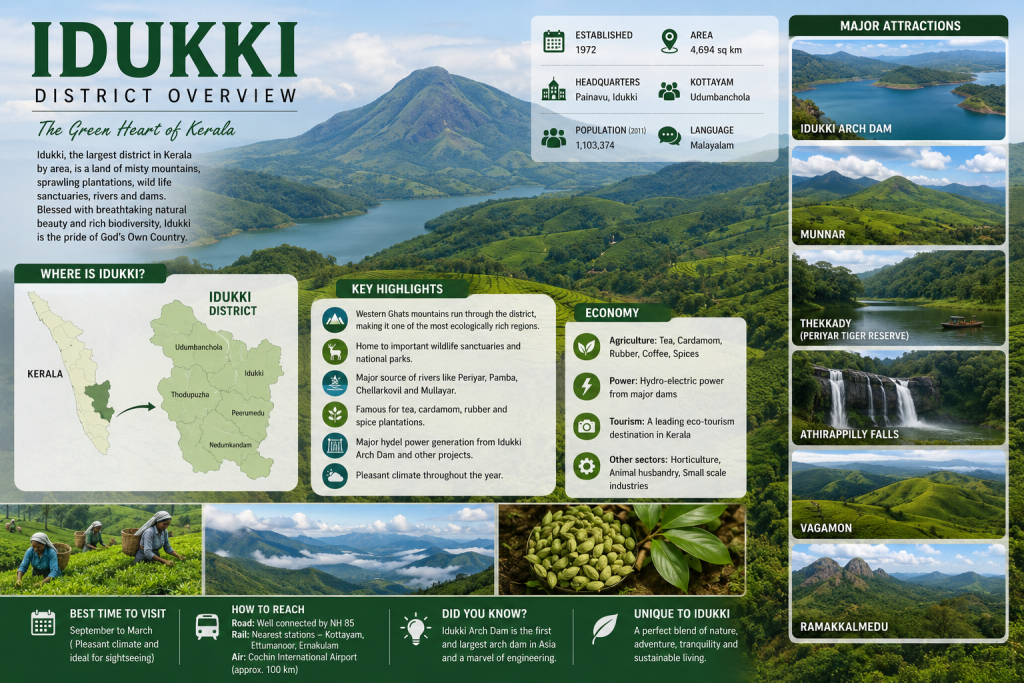
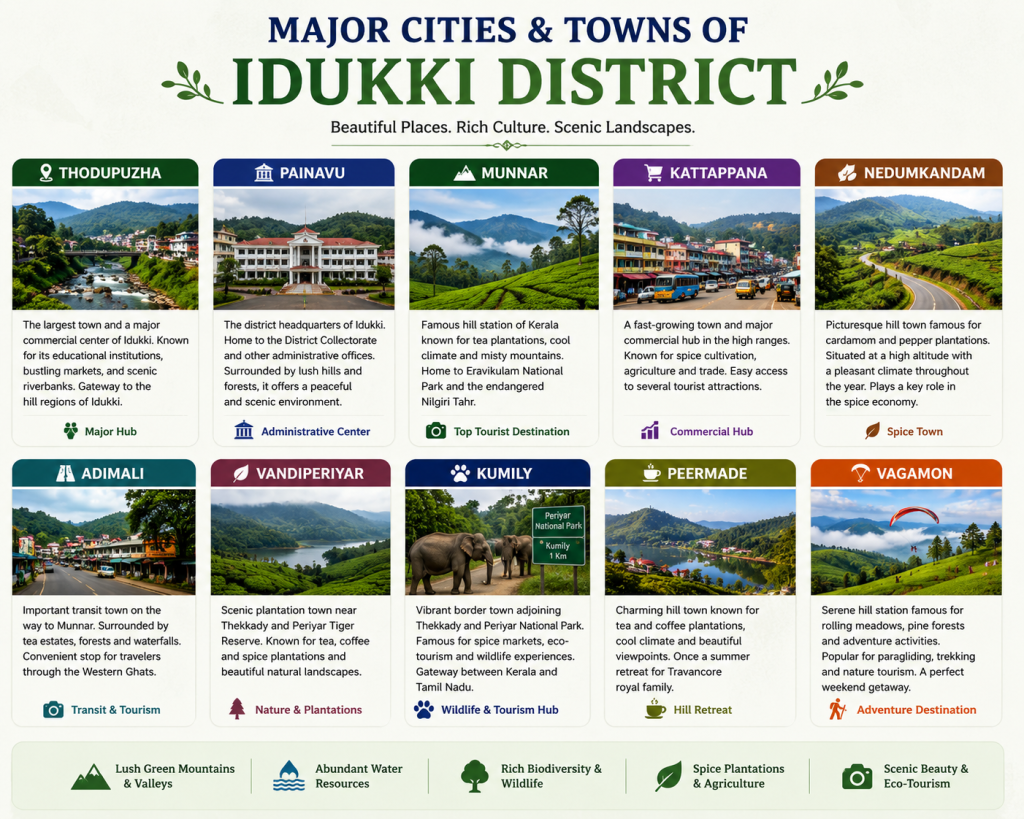
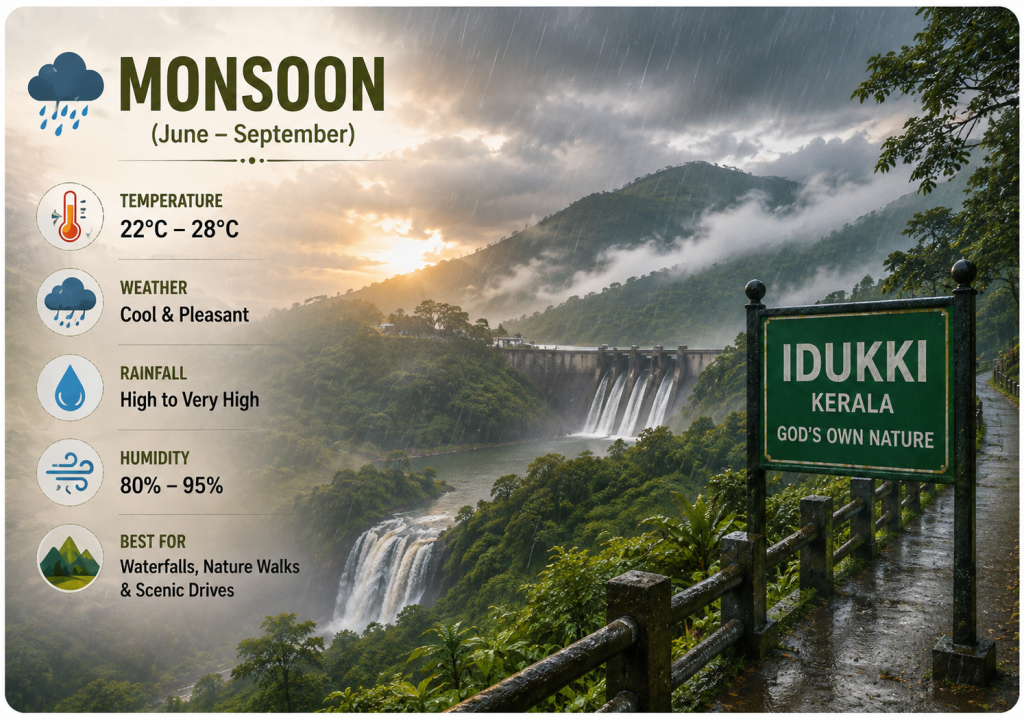
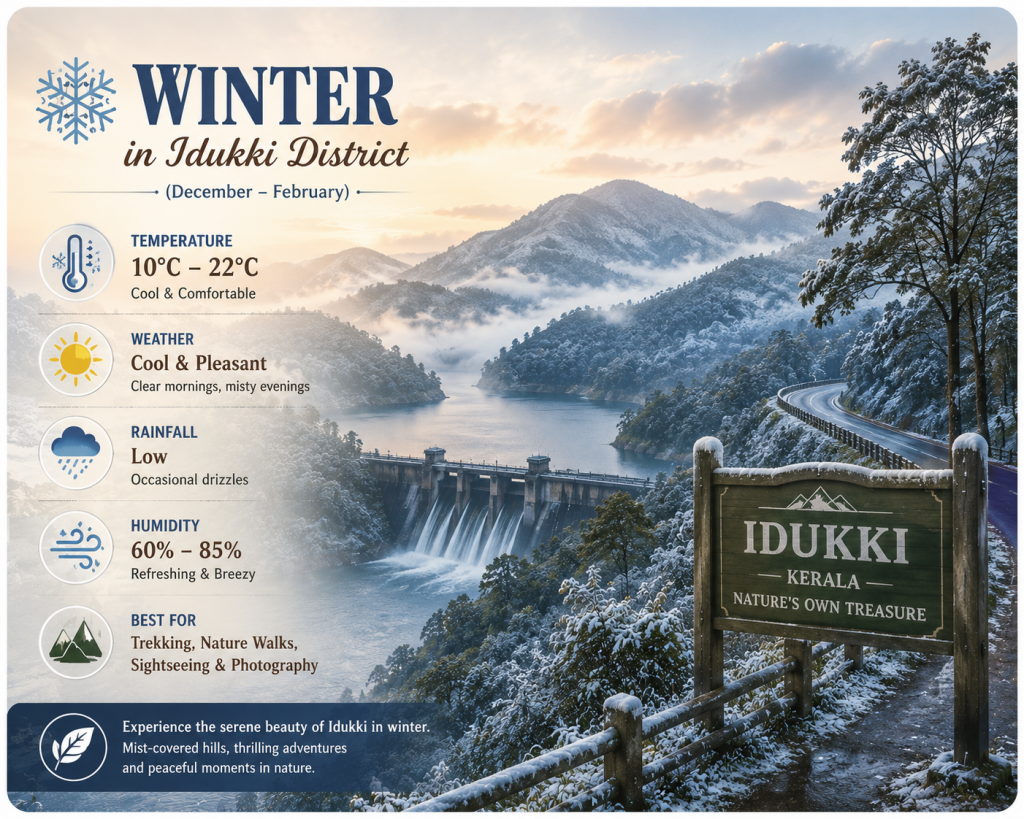
Idukki is a beautiful and mountainous district in the state of Kerala, India. It is known as the “Green Heart of Kerala” because of its lush forests, tea and spice plantations, wildlife sanctuaries, rivers, waterfalls, and scenic hills.The district was formed in 1972 and is the largest district in Kerala by area. Idukki is famous for the Idukki Arch Dam, one of the major hydroelectric projects in India. The district is also home to popular tourist destinations such as Munnar, Thekkady, Vagamon, Ramakkalmedu, and Idukki Wildlife Sanctuary.The economy of Idukki mainly depends on agriculture, plantations, tourism, and hydroelectric power generation. Important crops include tea, cardamom, coffee, pepper, and rubber. The Western Ghats give Idukki rich biodiversity and a pleasant climate, making it an important ecological and tourism region.
Overall, Idukki is a unique combination of mountains, forests, plantations, wildlife, dams, and natural beauty, making it one of Kerala’s most attractive and environmentally significant districts.
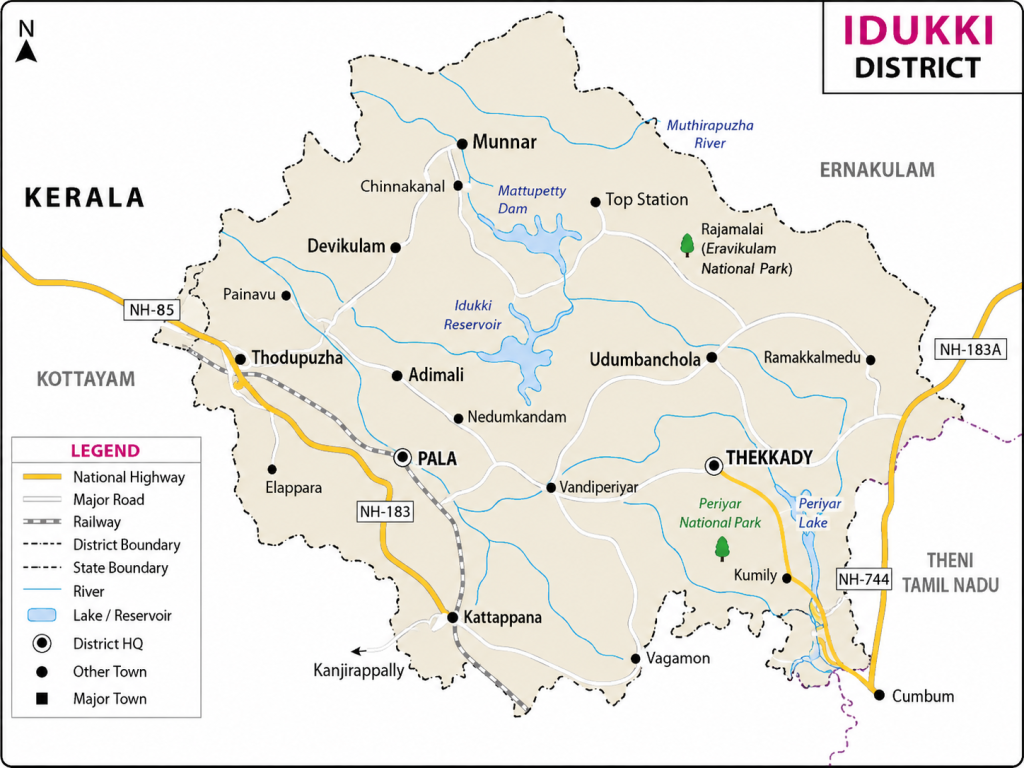
Geographical Chart
The measurement chart of Idukki district highlights its geographical area, population, and physical characteristics. Idukki covers approximately 4,612 square kilometres, making it the largest district in Kerala by area. The district has a predominantly hilly and mountainous landscape, with elevations ranging from low valleys to high peaks of the Western Ghats. These measurements reflect Idukki’s vast geographical extent, diverse terrain, and importance as a major natural region of Kerala.
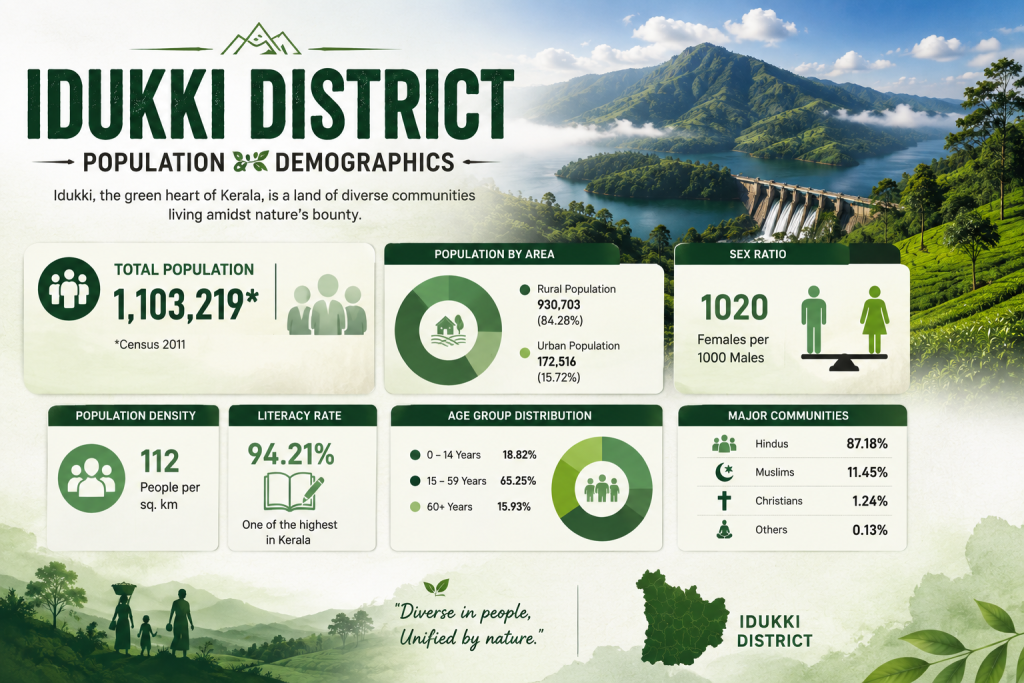
Population of Idukki
Idukki district, located in the eastern part of Kerala, is known for its mountainous terrain, dense forests, and scattered settlements. According to the 2011 Census, the district had a population of about 11.08 lakh people. The population density is relatively low compared with most other districts of Kerala because of the hilly landscape and large areas covered by forests. Idukki has a diverse population, including people belonging to different communities and tribal groups. The district also has a significant rural population, with agriculture, plantation farming, and related activities providing livelihoods for many residents. The population is distributed unevenly, with settlements concentrated mainly in the valleys and areas suitable for cultivation and habitation.
✦ HISTORY OF IDUKKI DISTRICT ✦
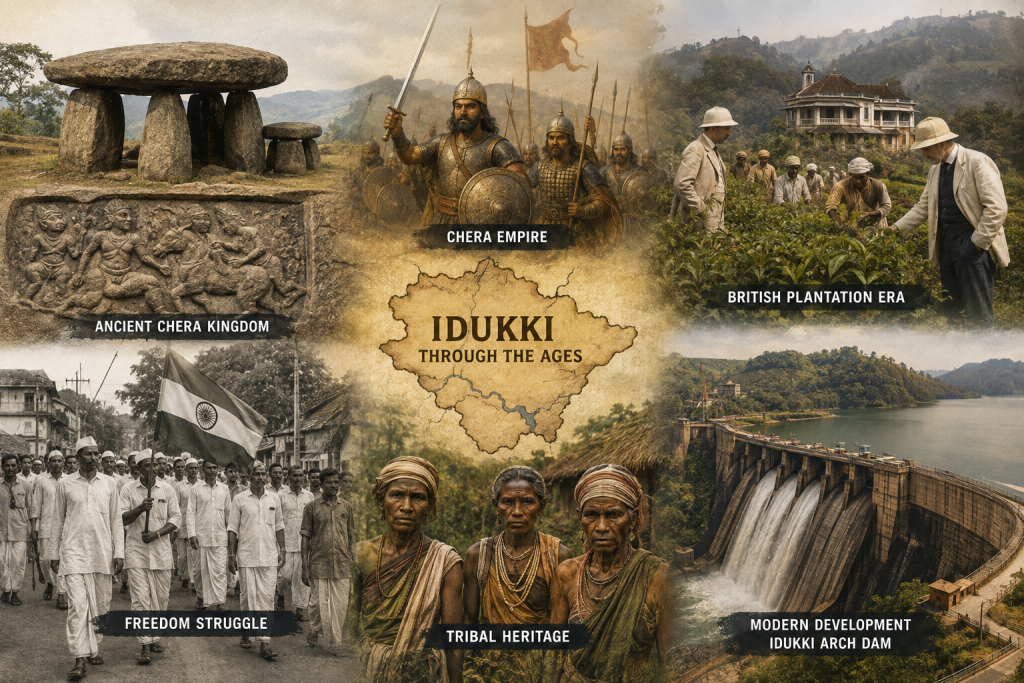
Idukki has a rich history closely connected with the Western Ghats, ancient settlements, agriculture, and the growth of plantations. The region was historically inhabited by tribal communities and was influenced by the Chera and later Travancore kingdoms.During the British period, plantation agriculture expanded, especially the cultivation of tea, coffee, cardamom, and other spices. Roads and settlements gradually developed in the highland areas.Idukki district was officially formed on 26 January 1972, by combining parts of the former Kottayam and Ernakulam districts. Thodupuzha, Devikulam, Peermade, and Udumbanchola became important administrative areas of the new district.A major milestone in Idukki’s modern history was the construction of the Idukki Hydroelectric Project and Idukki Arch Dam. The project transformed the district into an important centre of hydroelectric power generation and contributed significantly to Kerala’s development.
Today, Idukki is known for its natural beauty, wildlife, plantations, hydroelectric projects, and tourism, while its history remains deeply connected to the people, forests, mountains, and rivers of the Western Ghats.
Sources of Revenue in Idukki District
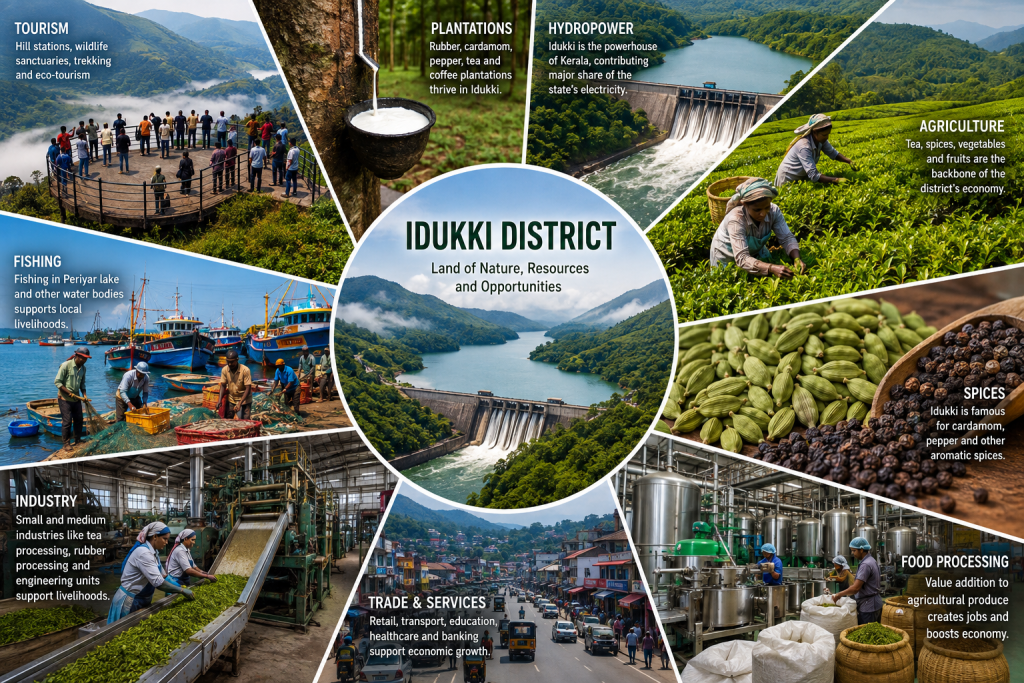
The revenue of Idukki district is mainly generated from agriculture, plantations, tourism, forests, and various government taxes and fees. The district is well known for the cultivation of cardamom, tea, coffee, pepper, and other plantation crops, which contribute significantly to the local economy. Tourism is another important source of revenue, with destinations such as Munnar, Thekkady, and various dams and hill stations attracting visitors throughout the year. Forest resources and allied activities also support the economy, while government departments collect revenue through land taxes, registration fees, licenses, and other services. Overall, Idukki’s revenue is closely connected with its natural resources, agricultural activities, and growing tourism sector.